Adrar 013: A lunar mosaic remelted by an ancient impact
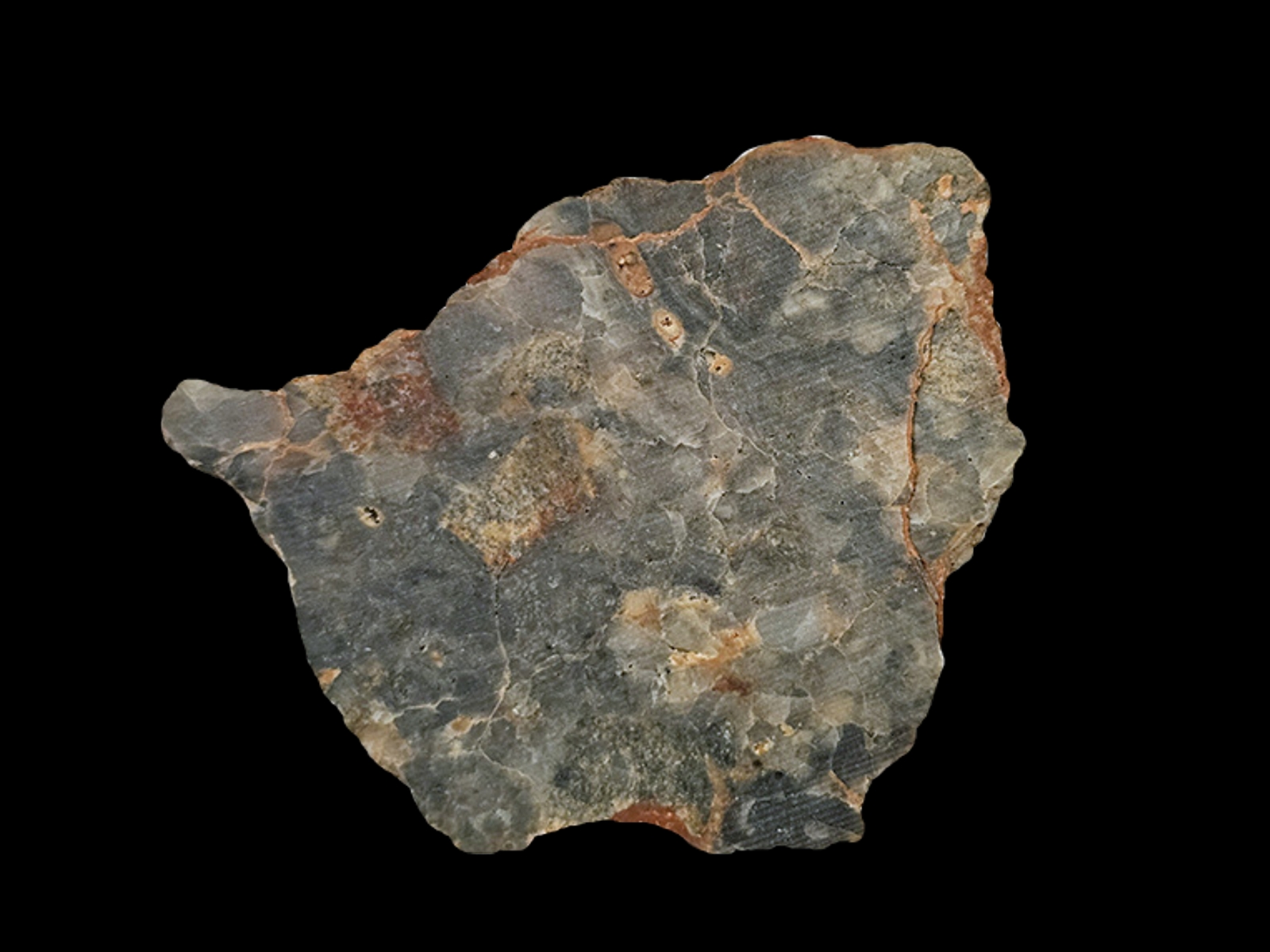
In cross-section, it resembles a colorful stone mosaic. Alternating light gray, grayish-green, and nearly black sections are intersected by thin brownish-orange veins. This diversity is not accidental – Adrar 013 is a rock composed of various fragments of lunar material that were crushed, partially melted, and re-fused during an ancient impact.
Adrar 013 is an officially recognized lunar meteorite found in Algeria. The total known weight is approximately 3.15 kilograms, and it is classified as a lunar impact melt breccia. It was found in several fragments originating from the same meteorite. (LPI)
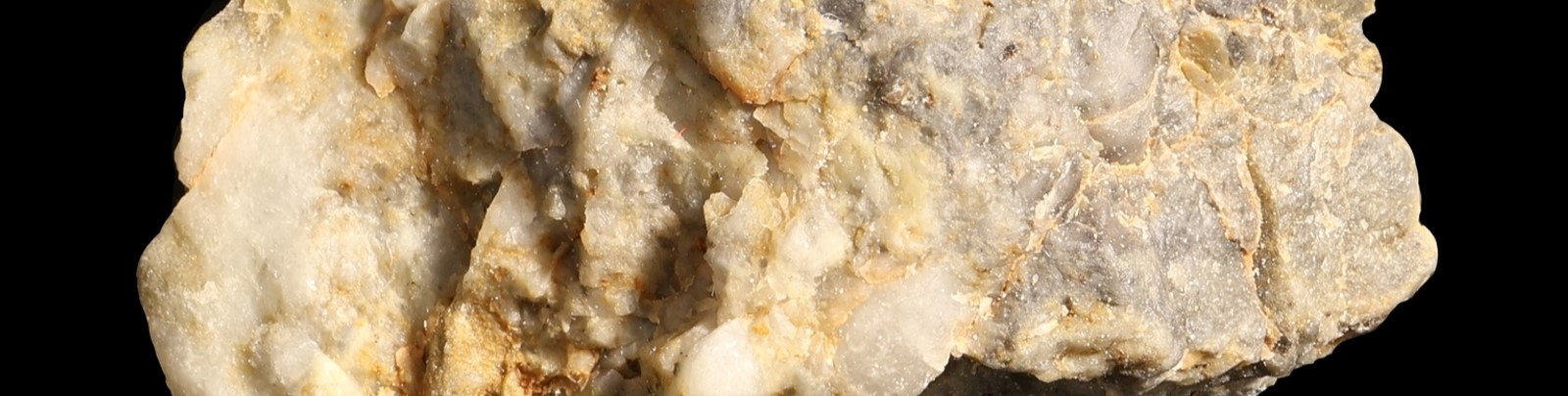
A rock marked by a lunar impact
Breccia is a rock formed by fragments of older rocks that were broken and later re-cemented. In the case of Adrar 013, impact melt also played a crucial role.
When an asteroid impacts the lunar surface, extreme pressures and temperatures are generated. Part of the rock shatters, part melts, and the flowing melt captures surrounding mineral grains and rock fragments. Upon rapid cooling, a new whole is formed that preserves traces of the original lunar crust and the collision itself.
Adrar 013 is therefore literally a frozen record of an ancient impact on the Moon.
What is Adrar 013 composed of?
It is technically described as an impact melt breccia of anorthositic-noritic to gabbroic composition. Its main minerals include:
- light plagioclase, primarily anorthite,
- pigeonite and augite pyroxenes,
- a smaller amount of olivine.
In trace amounts, ilmenite, chromite, and troilite have also been detected. The rock consists of grayish-green clasts embedded in an abundant melt matrix rich in anorthite. This matrix exhibits flow structures and signs of very rapid cooling. (LPI)
What do we see in the cross-section of Adrar 013?
The cut surface shows just how diverse a lunar meteorite can be. It is often a mixture of several components whose appearance is also influenced by grain size, the degree of remelting, and terrestrial weathering.
White and light gray parts
The lightest areas are rich in plagioclase, especially anorthite. This light mineral is a significant component of the old lunar crust. Thus, it represents the oldest part of this meteorite.
In the cross-section, it can form individual fragments as well as lighter parts of the impact melt. Some whitish areas appear almost translucent, while others have a milky-gray shade and are clearly separated from the surrounding darker material.
Gray and grayish-green parts
Extensive grayish-green areas correspond to the clasts described during the expert examination of the meteorite. They consist of a mixture of plagioclase, pyroxenes, and occasionally olivine.
It is precisely the different ratio of these minerals, along with the varying structure of the individual fragments, that creates the varied pattern of the cross-section. Some clasts are lighter and fine-grained, while others are dark and distinctly defined.
Dark spots and fine matrix
Darker areas may be primarily associated with fine-grained impact melt and a higher proportion of pyroxenes. The melt bonded the original fragments together and created a fine groundmass after rapid cooling.
Under a microscope, flow and rapidly cooled structures are visible within it. On a standard cross-section, they appear as irregular dark bands, spots, and transitions between individual clasts. (Washington University in St. Louis)
Brownish-orange veins and areas
Brown to rusty-orange parts are most likely a manifestation of terrestrial weathering and oxidation of iron-bearing components. They highlight mainly cracks, edges of clasts, and porous areas where moisture could have penetrated after the fall.
On the attached cross-section, both thin orange lines intersecting the rock and larger brownish areas are visible.
Why is Adrar 013 visually exceptional?
Adrar 013 captivates primarily with its diversity. On a relatively small surface, light anorthitic fragments, grayish-green rock clasts, a dark impact matrix, and brownish-orange traces of weathering alternate.
Each slice therefore offers a slightly different image. One may consist mainly of fine gray transitions, another may contain striking light clasts, and another may show distinct dark spots or rusty veins. It is not a uniform stone, but a mixture of several generations of lunar rocks combined by the energy of an ancient impact.
A true record of a lunar catastrophe
Adrar 013 is an authentic fragment of the Moon that captures the moment when solid rock broke apart, partially melted, and re-solidified in a new arrangement.
Its scientific value lies in the information about the composition and impact history of the lunar crust. For collectors, however, it is equally interesting due to its appearance: each slice represents an original image created by geological processes beyond our planet.