
A remarkable meteorite from the Algerian Sahara, which expands our understanding of the diversity of rocks in the Solar System.
Most meteorites belong to groups that scientists are familiar with and can characterise with reasonable accuracy. From time to time, however, a specimen appears with such an unusual composition that it cannot be unambiguously classified into any of the existing categories. One such case is NWA 15915, a rare unclassified achondrite originating from Algeria.
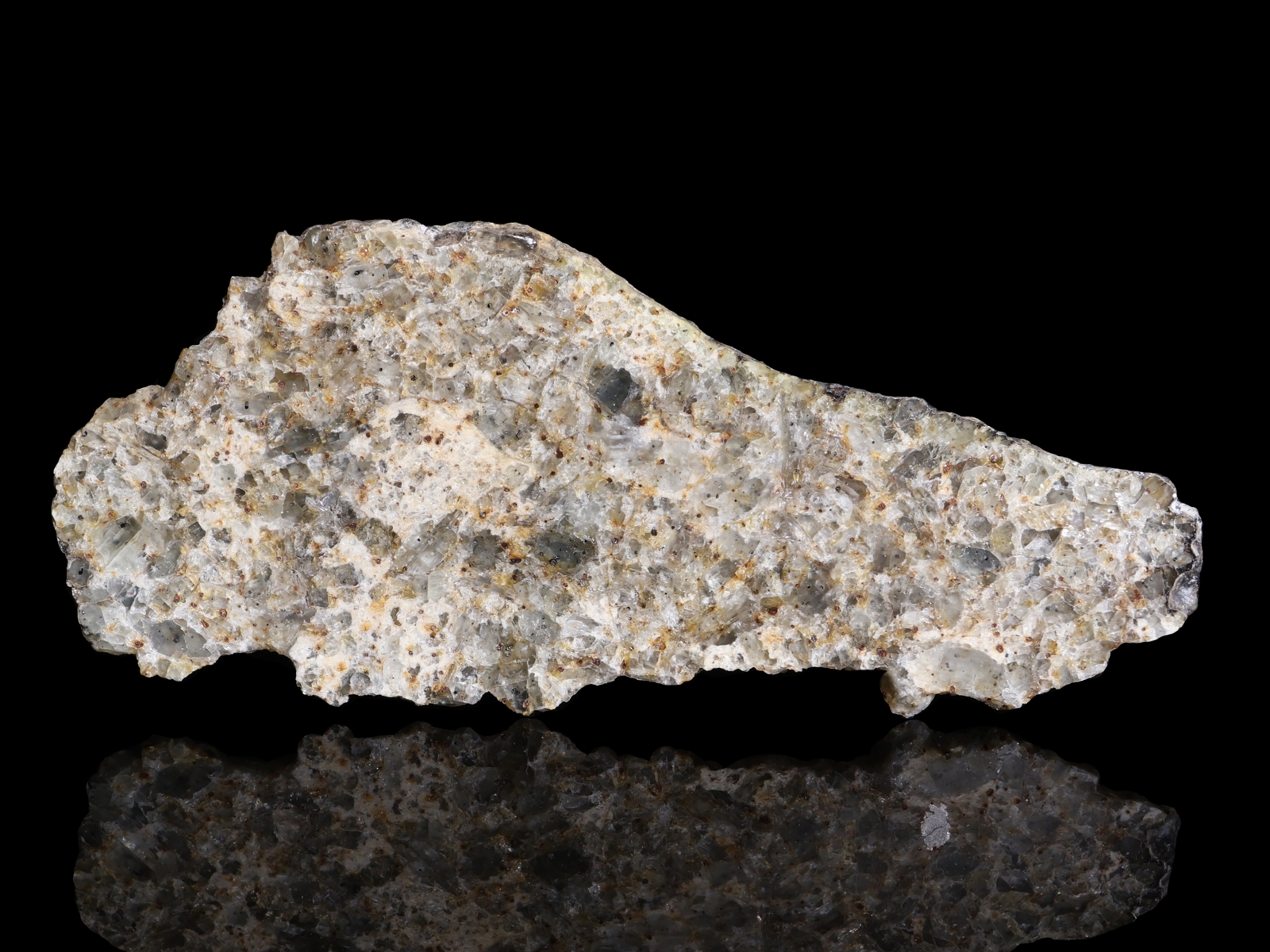
Its main distinguishing feature is its unusual mineral composition, dominated by almost pure augite. It is precisely this characteristic that makes it an interesting specimen not only for scientific research but also for meteorite collectors.
Discovery in the Algerian Sahara
The NWA 15915 meteorite was recovered in the Aougrout region of Algeria. According to available data, the largest stone was found in 2022 and subsequently cut up. Further fragments were later recovered from this area.
The designation NWA stands for Northwest Africa and is used for meteorites found across a vast area of north-western Africa. The total recorded mass of NWA 15915 is only approximately 2.84 kg, making it a rare specimen.
Unusual mineral composition
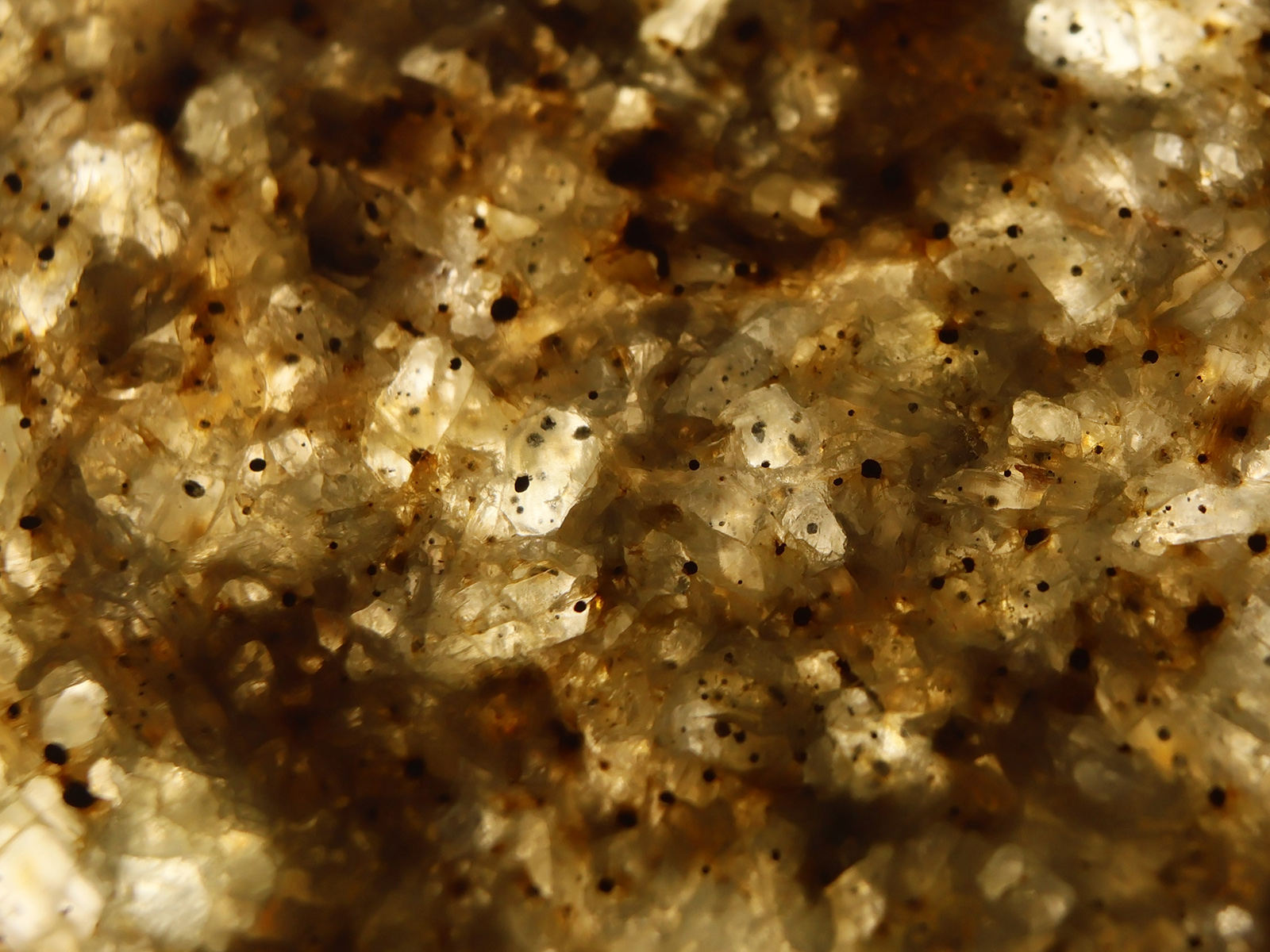
The NWA 15915 meteorite is characterised by a light beige to yellowish interior with a coarse-grained structure, where the mineral grains measure approximately 2 mm in diameter. In places, a dark fusion crust, formed during its passage through the atmosphere, remains on its surface. When cut, its internal structure stands out beautifully and can be viewed by shining a light through it.
The most important component of the meteorite is augite, a mineral from the clinopyroxene group. It is exceptionally rich in magnesium and contains only a very small amount of iron. Approximately one-tenth of the rock is also made up of enstatite, another mineral from the pyroxene group.
Of particular interest is the absence of two common minerals, olivine and plagioclase. Their absence, combined with the predominance of almost pure augite, creates an unusual combination that distinguishes NWA 15915 from many other stony meteorites. The rock is therefore classified as a magnesium-rich clinopyroxenite.
What is an ungrouped achondrite?
Achondrites are stony meteorites that lack the typical spherical structures known as chondrules, which are common in chondrites. They often originate from bodies on which processes of melting, crystallisation and the separation of mineral components took place.
The designation ‘ungrouped achondrite’ means that the meteorite’s properties do not correspond to any of the currently recognised groups. This does not mean that it is completely unexplored. On the contrary, its distinctive features may only become apparent through detailed laboratory analysis.
Such meteorites are important to scientists because they may represent as yet little-understood types of parent bodies or provide evidence of processes that are not sufficiently represented in more common meteorites.
What does its origin reveal?
The mineral composition of a meteorite can reveal a great deal of information about the conditions under which the rock was formed. In the case of achondrites, the evolution of the magma, the temperature and the chemical composition of the original material play a particularly important role.
In the case of NWA 15915, the predominance of magnesium-rich clinopyroxene suggests very specific formation conditions. However, the exact origin and all the processes that led to its current composition cannot be determined on the basis of mineralogy alone. Oxygen isotope analyses also form a significant part of the research. These help to compare individual meteorites and investigate their possible relationships. NWA 15915 shows similarities in certain isotopic properties to another rare achondrite, NWA 13307; nevertheless, their mineralogical compositions differ significantly.
It is precisely the combination of mineralogical, chemical and isotopic data that is important for the correct classification of meteorites.
Source : https://www.lpi.usra.edu/meteor/metbull.php?code=79980